
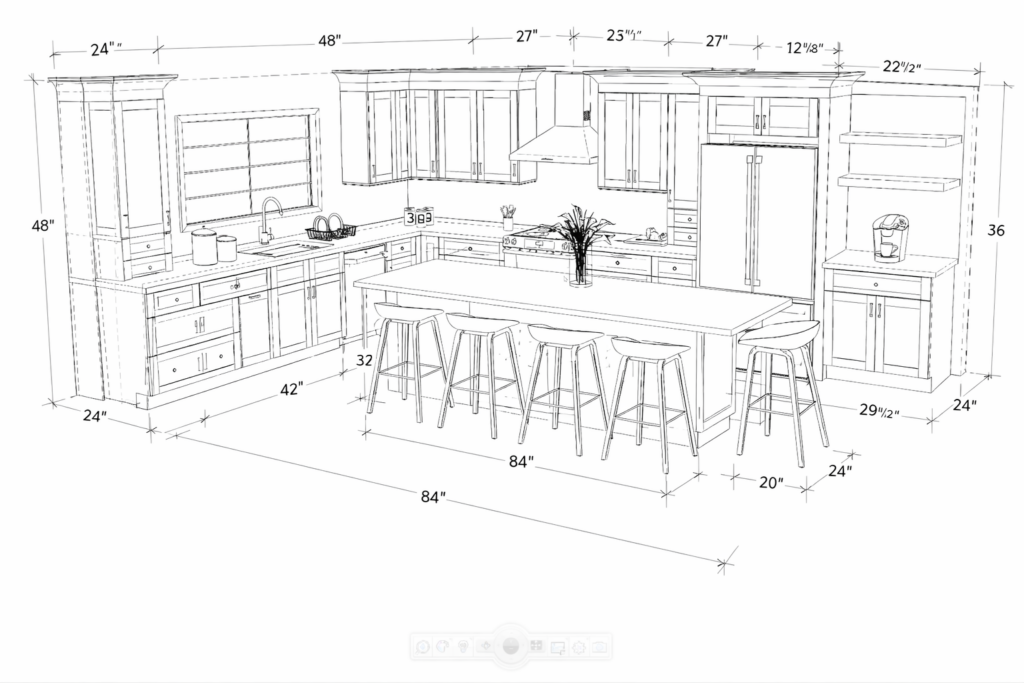
Kitchen Dimensions & Code Requirements: 2026 IRC & NKBA Guide
Understanding kitchen dimensions, code requirements, and NKBA guidelines is the foundation of any successful kitchen remodel. Your kitchen must comply with residential building codes while delivering comfort, workflow efficiency, and resale value.
This comprehensive 2026 guide explains:
Minimum kitchen dimensions
IRC code requirements
NKBA recommended clearances
Electrical & ventilation standards
Landing space rules
Work triangle measurements
Island spacing requirements
Always verify final requirements with your local building department, as jurisdictions may adopt amendments to the IRC, NEC, and energy codes.
What Is the Minimum Size for a Kitchen?
The International Residential Code (IRC) does not mandate a minimum kitchen square footage. However, kitchens must meet general habitable space requirements:
IRC R305 – Ceiling Height
Minimum ceiling height: 7 feet
Beams and ducts may project downward under specific limits
Egress & Access
Kitchens must maintain clear paths of travel consistent with IRC R311 (Means of Egress).
While there’s no minimum kitchen size requirement, most functional kitchens range between:
70–150 square feet (small kitchens)
150–300+ square feet (standard kitchens)
Kitchen Dimensions, Code Requirements & Clearance Standards
Proper spacing ensures safety and functionality.
Work Aisle Width (Between Counters or Island)
NKBA Recommendations (2023):
42 inches minimum for one cook
48 inches minimum for two cooks
The IRC does not prescribe exact aisle widths but requires safe circulation and exit access.
Walkways (Through Traffic Areas)
36 inches minimum clear width
Required for safe passage and emergency access
If a kitchen is a primary pathway between rooms, larger walkways are recommended.
The Kitchen Work Triangle (Updated Guidelines)
The work triangle connects:
Sink
Refrigerator
Cooktop/Range
NKBA Recommendations:
Total triangle distance: 13–26 feet
Each leg: 4–9 feet
No major traffic through the triangle
Modern kitchen layouts may follow zone-based planning instead, but spacing efficiency remains critical for workflow.
Kitchen Counter Height & Depth Standards
Standard Counter Height
34–36 inches (industry standard)
34 inches maximum for ADA-accessible design
Counter Depth
Base cabinet depth: 24 inches
With countertop overhang: approximately 25–25½ inches total depth
Required Landing Space (2026 NKBA Guidelines)
Landing space prevents unsafe placement of hot cookware and groceries.
Sink Landing Space
24 inches minimum on one side
18 inches minimum on the other side
Dishwasher within 36 inches of sink recommended
Cooktop Landing Space
15 inches on one side
12 inches on the other side
Vertical Clearance Above Cooktop
30 inches minimum to unprotected cabinets
Always follow manufacturer installation specifications
Refrigerator Landing Space
15 inches minimum on handle side
Or directly across from refrigerator within 48 inches
Wall Oven Landing Space
15 inches adjacent
Or 30 inches across within 48 inches
Kitchen Island Dimensions & Seating Clearances
Island Clearance
42 inches minimum (single cook)
48 inches recommended (two cooks)
Seating Overhang Requirements
12 inches for standard counter-height seating
15 inches for counter-height stools
18 inches for bar-height seating
Allow 24 inches of width per seated person.
Kitchen Electrical Code Requirements (2023 NEC)
Kitchen electrical systems are among the most regulated in residential design.
Required Small Appliance Circuits
Minimum two 20-amp small appliance branch circuits
GFCI Protection
Required for:
Countertop receptacles
Within 6 feet of sink
AFCI Protection
Most jurisdictions require AFCI protection for kitchen circuits.
Countertop Outlet Spacing
Receptacles required every 12 inches along countertop wall space
Required for islands and peninsulas
Dedicated Circuits (Common Requirements)
Refrigerator (varies by jurisdiction)
Dishwasher
Disposal
Microwave
Electric range or cooktop
Always confirm with your Authority Having Jurisdiction (AHJ).
Kitchen Ventilation Requirements (IRC M1503 – 2026)
Proper ventilation improves indoor air quality and safety.
Range Hood Requirements
Must vent outdoors unless listed as recirculating
Minimum 100 CFM intermittent ventilation
Makeup Air
Required if hood exceeds 400 CFM (varies by jurisdiction)
Fire & Safety Requirements
Smoke Alarms (IRC R314)
Required in:
Sleeping rooms
Outside sleeping areas
Each story of dwelling
Carbon Monoxide Alarms (IRC R315)
Required outside sleeping areas when fuel-burning appliances are present.
Accessibility & Aging-in-Place Considerations
Though not required by IRC in single-family homes, many homeowners request universal design features:
40–48 inch clear floor space at work areas
Knee clearance at sinks (30 inches wide minimum)
Side-opening wall ovens
Lever-style handles
Microwave 24–48 inches above floor
These features improve long-term usability and resale appeal.
IRC vs. NKBA: What’s the Difference?
| IRC (Building Code) | NKBA (Design Guidelines) |
|---|---|
| Legal minimum safety requirements | Best-practice design standards |
| Enforced by local building departments | Industry recommendations |
| Focused on safety & structure | Focused on comfort & efficiency |
To build legally, follow IRC.
To build beautifully and functionally, follow NKBA.
Final Thoughts: Designing a Code-Compliant Kitchen in 2026
A successful kitchen balances:
Code compliance
Workflow efficiency
Comfort
Ventilation
Electrical safety
Storage optimization
Before finalizing plans:
Confirm local code adoption year (2021 or 2026 IRC)
Verify NEC requirements with your electrician
Review ventilation and makeup air rules
Consider NKBA best practices for long-term value
Verify local code amendments
Planning a Kitchen Remodel in the Boston Area?
Kitchen & Bath Center is a local design + remodeling showroom in Framingham, MA, helping homeowners turn building-code constraints into beautiful, code-compliant kitchens. Free in-home consultation.